
Key Takeaways
- Head tilting often signals an underlying vision issue.
- Children adjust their posture to compensate for blurry sight.
- Crossed eyes and refractive errors frequently prompt this behavior.
- Muscle tightness or balance problems may also play a role.
- Routine eye exams catch these challenges early for better visual health.
Head Tilting Can Indicate a Problem
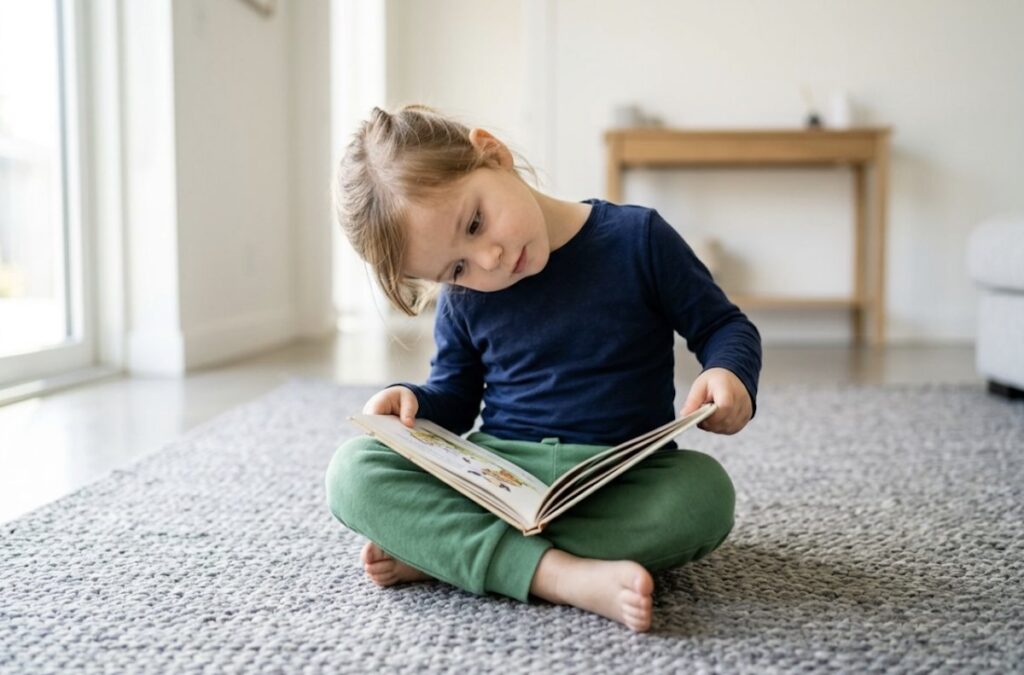
You might notice your little one watching television with their chin tucked to one side. Or maybe they look at their favorite picture books with their head angled to the left. These small postural changes look like quirky habits at first glance, but our team at Total Vision Santa Cruz recognizes that these behaviors often warrant professional attention.
Children often tilt their heads to compensate for vision problems and make blurry objects appear clearer. When their eyes struggle to focus properly on a screen or a page, shifting their neck helps them find a better angle. This physical adjustment changes how light enters the eye. They rely on this posture to see the world around them without constant blurriness.
Common Reasons for a Head Tilt
Kids often adopt unusual neck postures as a way to adjust for physical discomforts that they can’t fully articulate. Some possible causes include:
- Shifting their gaze to compensate for blurry or double vision.
- Attempting to ease neck strain from an uncomfortable sitting posture.
- Adjusting their head position to hear better from one ear.
Vision Problems
A number of different vision problems can result in frequent head tilting.
Crossed Eyes & Misalignment
Sometimes a child’s eyes point in slightly different directions. This misalignment sends two different images to the developing brain, making it harder for children to process what they see.
Tilting the head can reduce double vision by aligning the visual field. This, in turn, eases strain on the tiny eye muscles, allowing children to play and read more comfortably. But it doesn’t fix the underlying issue.
Need for Corrective Lenses
Common refractive issues like nearsightedness or farsightedness cause blurry vision. Some kids also experience uneven vision where one eye sees clearly while the other struggles to process details. Turning the head brings objects into the direct field of view of the stronger eye.
Glasses can help correct this physical imbalance.
Muscle and Neurological Factors
Vision problems are a major factor behind unusual posture. However, other physical developments can also influence how a child holds their chin.
Tight Neck Muscles
Short neck muscles sometimes physically pull the head sideways. This tightness is often present from birth or develops slowly from specific sleep habits over time, and it physically limits comfortable movement.
A child might lean their head simply because turning it fully feels too stiff or tight. You might also notice them turning their entire torso instead of just their neck when someone calls their name.
Balance and Brain Connections
The body relies on a complex internal system to stay upright and balanced. Inner ear issues affect spatial awareness and can throw off a child’s natural center of gravity.
Neurological conditions occasionally impact the balance centers located in the brain. This creates a confusing physical feeling of being pulled sideways. The child then tilts their head to match what their brain perceives as straight and level.
Signs to Watch For & Next Steps
Young kids rarely complain about their eyesight because they assume that everyone sees the world like they do. You can watch for subtle behavioral cues during their daily playtime instead. Catching these early hints can help support their visual development before school starts:
- They squint or close one eye frequently when stepping into bright sunlight.
- They sit right up against the television or hold tablets inches from their face.
- They experience frequent clumsiness or bump into familiar furniture.
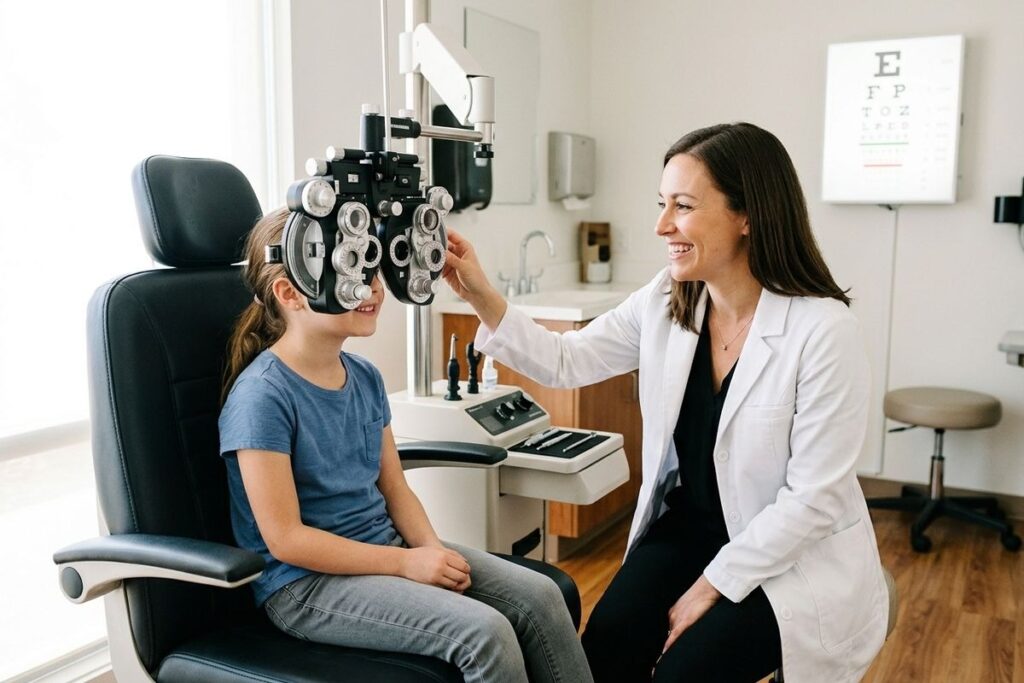
A timely professional evaluation helps address unexpected postural changes. Regular visits to an eye doctor in Santa Cruz yearly can help track visual development over time. These routine checks catch simple refractive errors before they worsen and impact reading skills.
Schedule an eye exam with our team at Total Vision Santa Cruz to support your child’s eye health and keep their sight sharp.