

Key Takeaways
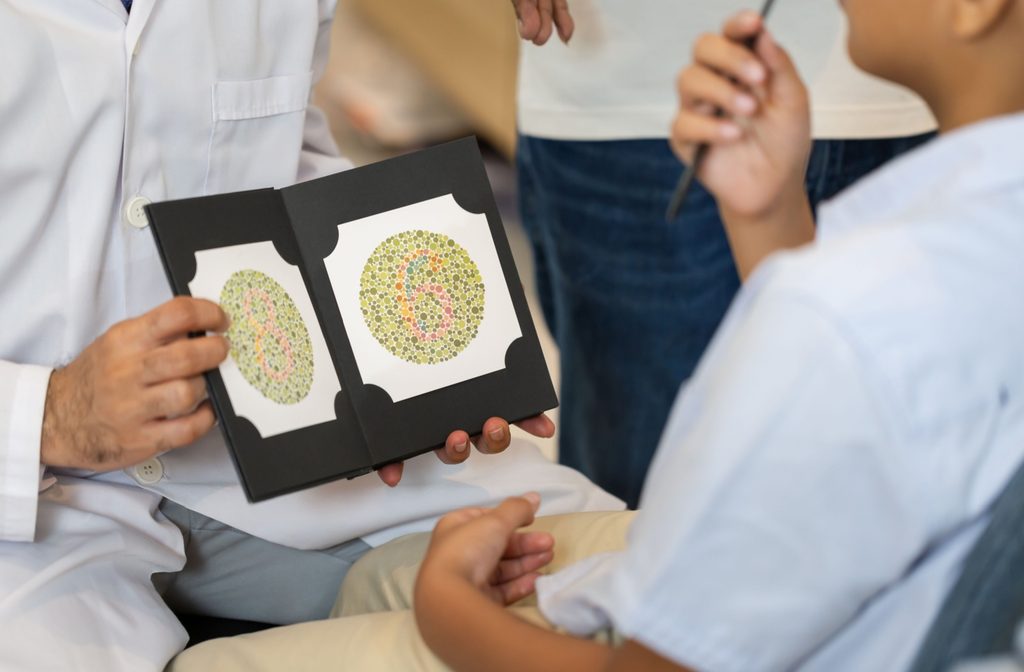
- Color vision changes happen when the light-sensitive cones in your eyes work differently.
- Red and green vision deficiency makes it hard to distinguish between those two colors.
- Blue and yellow vision deficiency changes how you perceive purple, pink, and gray shades.
- Total color blindness means you see the world entirely in black, white, and gray tones.
- An eye doctor in Santa Cruz can help you adapt to daily visual challenges.
How Your Eyes Perceive Light & Colors
You might look at a lush forest and see a vibrant mix of bright greens and rich browns. Someone else looking at that same scene might see a flat wash of dull olive tones. Our team at Total Vision Santa Cruz knows that the difference comes down to how your eyes capture light from your environment.
The main types of colorblindness include red and green deficiency, blue and yellow deficiency, and complete grayscale vision. Your visual experience depends on whether certain light receptors in your eyes function differently than expected. Knowing how these receptors work helps you make sense of your own sight.
The Role of Retinal Cones
The back of your eye contains three types of color-sensitive cones. These tiny structures process red, blue, and green light waves. Color blindness happens when one or more cone types either work incorrectly or aren’t present in the eye.
A typical human eye with three kinds of functioning cones can see up to 1 million different shades of color.
Red And Green Color Vision Deficiency
Red and green deficiency is the most common kind of colorblindness, and it’s far more common in men. This condition affects how you see many natural environments and everyday objects.
Mild Red & Green Vision Changes
People with a mild red-green deficiency may struggle to distinguish red and green.
- Greens and reds may seem to overlap.
- Some of these shades may look less bright than usual.
- Browns, oranges, and greens are easily confused.
Severe Red & Green Vision Changes
In some cases, the eyes are completely unable to perceive either red or green. People with this condition perceive the world as a mixture of what people with normal vision might call a mixture of greens, blues, and some yellows. Pale shades are hard to distinguish, as is the difference between oranges and reds.
Blue & Yellow Color Vision Deficiency
This type of colorblindness is much less common. It happens when the cones that identify blue light don’t work properly or are missing altogether.
Mild Blue & Yellow Vision Changes
A mild change in your blue and yellow perception alters your view of cool and warm tones. These symptoms include the following.
- It becomes hard to tell blue apart from green.
- You confuse yellow hues with red hues.
Severe Blue And Yellow Vision Changes
A significant blue and yellow deficiency happens when the blue-sensitive cones in your eyes are missing altogether. You might experience these symptoms:
- You are unable to differentiate purple from red or blue from green.
- You can’t tell yellow from pink shades.
- Colors look less bright.
Total Color Blindness And Grayscale Vision
Complete color blindness is quite rare. People who have this condition can’t see colors at all, they often struggle to see clearly, and they’re often sensitive to light.
Vision Care with an Eye Doctor in Santa Cruz
Routine eye care supports your long-term visual health. A professional team can help you navigate the world with greater ease.
Comprehensive Eye Exams
Regular checkups provide a clear picture of your overall eye health. As your eye doctor in Santa Cruz, we can evaluate your vision during these routine visits in order to identify potential problems like color vision deficiency. From there, we can help you find a way to manage or treat your situation.
Education & Support for Your Vision
If you do have a form of colorblindness, our team will talk you through exactly what’s happening with your eyes. We’ll also tell you about potentially helpful visual aids that can make your life more convenient.
Take proactive steps for your vision and schedule an eye exam with Total Vision Santa Cruz to support your eyes for years to come.